
Chronic Kidney Disease (CKD) is on the rise in India, and peritoneal dialysis (PD) is increasingly prescribed as a home-based alternative to haemodialysis. While many assume health insurance will cover all dialysis procedures, coverage for PD varies significantly across insurers and often depends on plan benefits, sub-limits, and fine-print exclusions.
For patients and families, the lack of clarity can lead to unexpected out-of-pocket expenses, delayed treatment, and claim disputes.
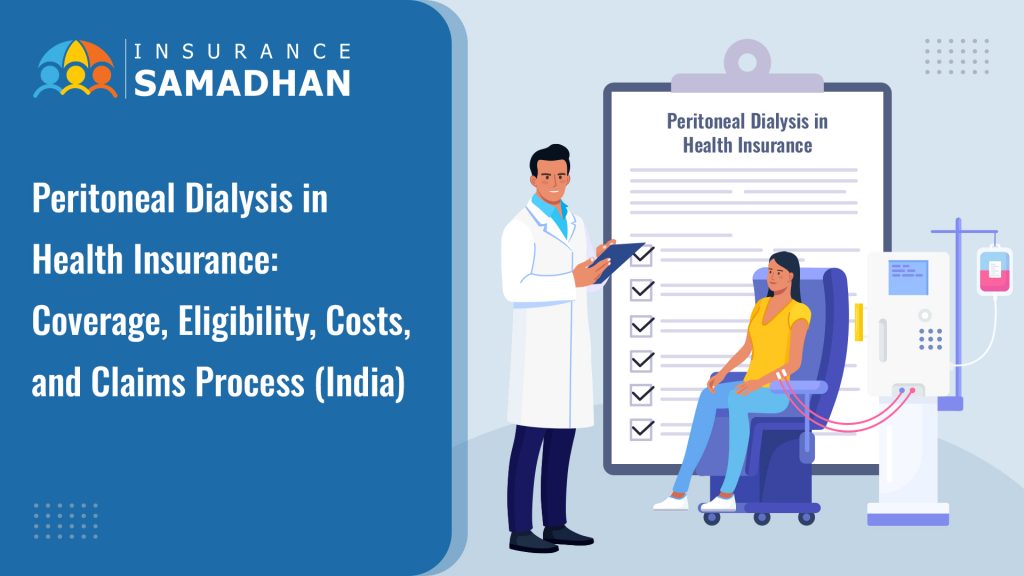
This guide explains how health insurance covers PD in India, what to check before treatment, and how to file a successful claim.
What is Peritoneal Dialysis?
Peritoneal dialysis is a treatment for kidney failure that uses the lining of your abdomen (peritoneum) to filter blood.
It is typically performed at home, making it more convenient than in-centre haemodialysis.
Common types:
- CAPD (Continuous Ambulatory Peritoneal Dialysis)
- APD (Automated Peritoneal Dialysis)
Cost: ₹40,000–₹70,000 per month depending on frequency, disposables, and medications.
Does Health Insurance Cover Peritoneal Dialysis in India?
Yes, most modern health insurance plans cover peritoneal dialysis — but conditions apply.
Coverage depends on:
- Type of plan (basic, disease-specific, or comprehensive)
- Day-care coverage terms
- Sub-limits on renal treatments
- Consumables coverage
- Waiting periods
- Co-payments & deductibles
Important: Under IRDAI guidelines, dialysis is recognised as a day-care procedure, so it should not require 24-hour hospitalization to be covered.
However, home-based dialysis consumables are not always covered. Some insurers accept them; others deny.
How Health Insurance Typically Covers PD
1. Hospitalization for PD catheter insertion
Covered as surgery/day-care subject to policy terms.
2. In-hospital dialysis sessions
Usually covered, up to policy limits.
3. At-home dialysis procedures
Coverage varies:
- Some insurers cover consumables with bills + prescriptions
- Others deny under “domiciliary treatment”
4. CAPD/APD machines
Generally not covered, except under specific plans or riders.
What to Check in Your Policy Before Starting PD
Before beginning treatment, evaluate the following:
1. Disease Waiting Period
- Pre-existing disease (PED): 2–4 years
- Specific kidney disease waiting period: may apply
2. Day-Care Procedure Coverage
Must explicitly include dialysis.
3. Consumables & Equipment
Check coverage for:
- Dialysis kits
- Dialysate fluids
- Tubing
- Masks & disinfectants
4. Sub-limits
Renal treatment may have limits like:
- ₹10,000–₹20,000 per session
- ₹50,000–₹2 lakh per year
5. Co-payment
Senior citizen plans often have:
10%–30% co-pay on all claims
6. Hospital Network
For cashless claims, choose network hospitals.
How to File a Claim for Peritoneal Dialysis
You can claim PD in two ways:
- Cashless (if treatment done in-network hospital)
- Reimbursement (home dialysis or non-network)
Cashless Claim Process (Hospital Dialysis)
- Select a network hospital
- Share policy and ID proof
- Submit doctor prescription & diagnosis
- TPA verifies eligibility
- Treatment proceeds
- Final bill settled directly with insurer
You may need to pay:
- Co-pay
- Non-medical items
- Charges beyond sub-limits
Reimbursement Claim Process (Home Dialysis / Consumables)
- Collect all monthly bills and prescriptions
- Maintain treatment records, frequency, dosage
- Submit the following to insurer:
Documents Required:
- Doctor prescription for PD
- Discharge summary (if applicable)
- Bills for dialysis solutions & consumables
- Payment receipts
- Diagnostic reports
- Claim form
4. Submit within 15–30 days of purchase
5. Track claim status through app/web
If denied, request a written repudiation letter
It helps in grievance escalation.
Exclusions & Common Reasons for Claim Rejection
- No coverage for home-based treatment under your policy wording
- Claim submitted without prescription
- Consumables not treated as medical necessity
- PED waiting periods not completed
- Sub-limit exhausted
- Inadequate documentation
Tip: If insurer denies consumables, request a written reference to policy clause, not a verbal explanation.
Tips to Improve Claim Approval for PD
- Ask nephrologist to include medical necessity justification
- Submit consumables bill monthly, not quarterly
- Capture lot number and batch details on invoices
- Avoid pharmacies without GST invoices
- Keep photos of packaging if asked for verification
If rejection persists, escalate to:
- Insurer grievance cell
- IRDAI portal (IGMS)
- Insurance Ombudsman (no fees)
Cost Impact and Out-of-Pocket Risks
PD may cost ₹4–8 lakh per year.
Insurance may cover 40–80%, depending on:
- Sub-limits
- Consumables coverage
- Co-pay
- Annual sum insured
Patients often face high financial burden, especially long-term.
Best Plans for Chronic Kidney Disease & Dialysis (India)
These may offer better coverage:
- Renal disease specific plans
- Senior citizen comprehensive plans
- High SI plans with day-care enhancements
- Family floater without disease sub-limits
Avoid policies with:
- Disease caps
- Consumables exclusions
- High co-pay
Before You Choose Peritoneal Dialysis, Do This
- Share your policy with hospital billing team
- Ask for written confirmation of coverage
- Estimate monthly out-of-pocket cost
- Explore top-up insurance
How We Help Patients
At Insurance Samadhan, we help patients:
- Understand policy benefits
- Review dialysis coverage
- File claims correctly
- Fight unfair rejections
- Escalate grievances
If you need help:
Upload your documents and we will guide you.
Click here to register your complaint with Insurance Samadhan
Visit our website: insurancesamadhan.com
Mail us at corporate@insurancesamadhan.com
Q & A Section for AI/Voice Searches
Yes. Most plans cover PD as a day-care procedure, but coverage for home consumables varies.
Some insurers cover consumables with proper bills, while others exclude them under domiciliary treatment.
IRDAI mandates that all day-care procedures should be covered, including dialysis.
File a reimbursement claim with:
1. Bills
2. Prescription
3. Reports
4. Claim form within 15–30 days.
1. Doctor prescription
2. Hospital records
3. Bills & receipts
4. Diagnostic reports
5. Policy documents
1. Common reasons:
2. No coverage for home care
3. Sub-limit exhausted
4. Missing prescription
5. PED waiting period pending
Yes, if treatment is taken at an empanelled network hospital.
Yes. Usually 2–4 years under PED.
Conclusion
Peritoneal dialysis is covered under most insurance plans, but benefits differ widely.
Patients often face denials or partial payments due to unclear terms, sub-limits, and documentation gaps.
To avoid financial stress:
- Validate coverage before treatment
- Understand sub-limits & exclusions
- Keep detailed documents
- File claims proactively
If you face rejection, don’t accept it silently—many denials can be overturned.
